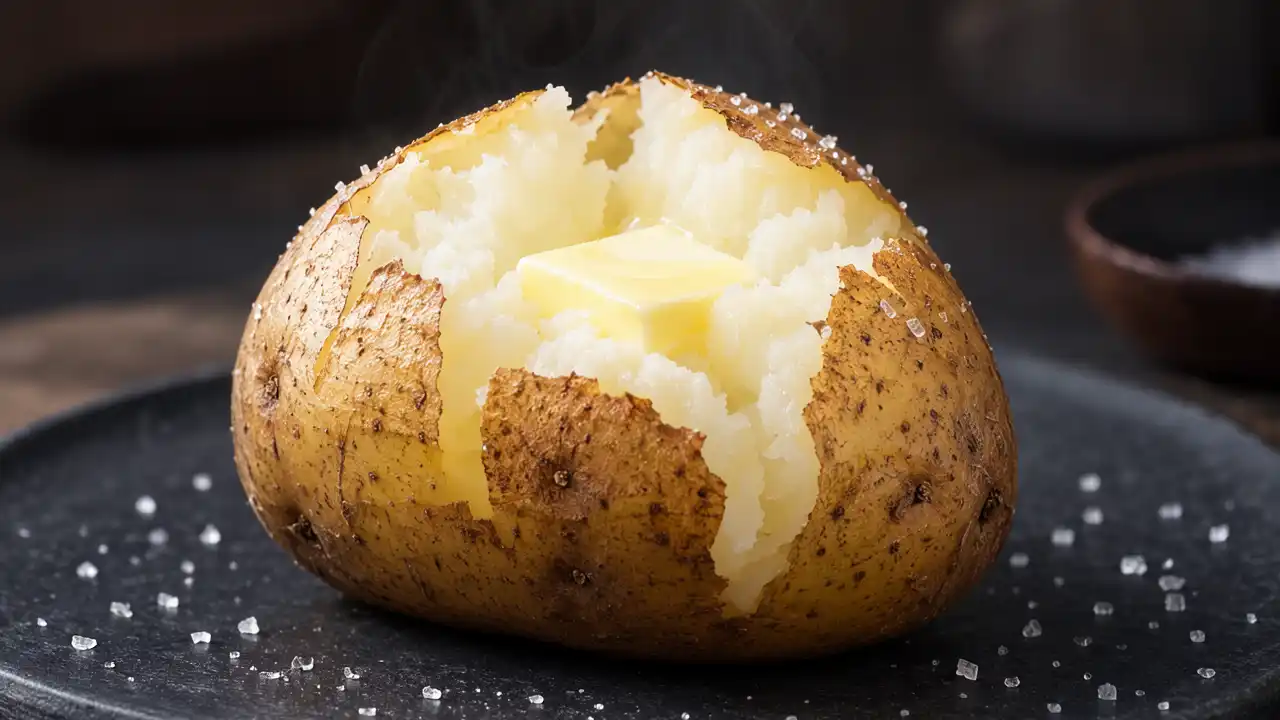
The Baked Potato Blossom: A Restaurant Trick Worth Stealing
Most home cooks have a baked potato they're proud of. Most home cooks also have a baked potato they're not. The difference between those two outcomes usually comes down to a handful of small decisions: which potato goes in the oven, what temperature it bakes at, and whether the person at the stove knows the one technique that separates a steamed spud from a proper restaurant-style bloom.
The bloom (sometimes called a "blossom") is the puffed, split-open interior you see at steakhouses and potato bars. The skin stays intact while the starchy flesh bursts outward through a few clean seams, creating a hollowed-out bowl that catches butter and sour cream in a way a simply sliced potato never does. It looks like a lot of work. It isn't.
Start with the right potato
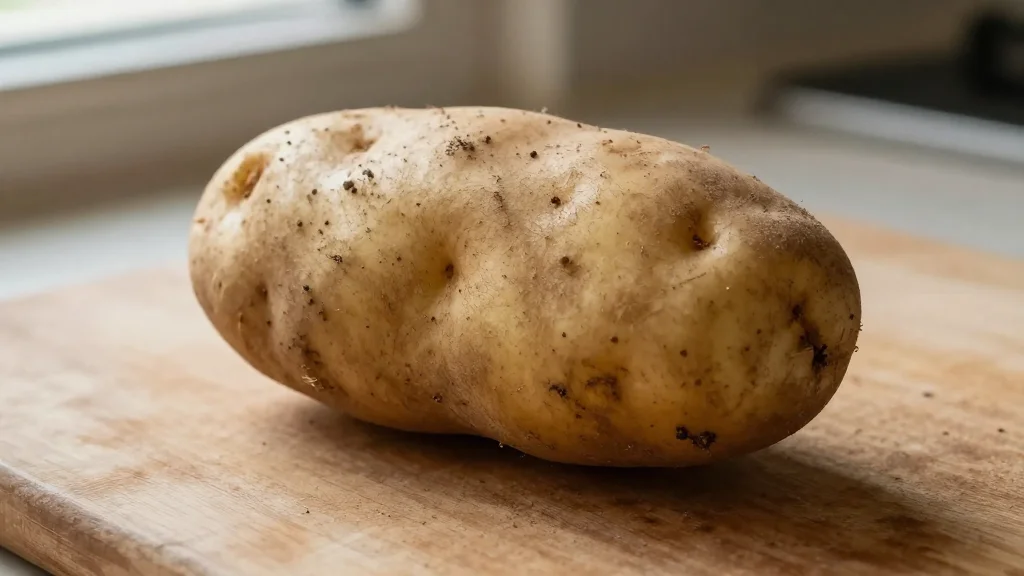
This is the one variable that's non-negotiable. Russet Burbank potatoes (the kind most people just call "russets") are high in starch and low in water, which means the starch granules absorb moisture, swell, and push the cell walls apart into that crumbly, plumpy texture people describe as "fluffy". Yukon Golds and other waxy varieties have thinner skins and a denser, buttery interior that simply won't hold the structure a bloom needs. They make fine roasted potatoes. They are not the right tool for this job.
Steakhouses like Morton's and Smith & Wollensky typically use a 40- or 50-count Idaho Russet Burbank, which weighs roughly a pound each. For a home cook, that translates to a potato in the 10-to-12-ounce range, large enough to have a real interior but small enough to cook through evenly in under an hour.
Skip the foil. Skip the microwave.
The instinct to wrap a potato in aluminum foil is understandable. It keeps the skin from drying out, it looks tidy, and it's what a lot of people grew up with. The problem is that foil turns the oven into a steamer. The potato cooks in its own trapped moisture, the skin never dries or crisps, and the result is closer to a boiled potato than a baked one. Reynolds Brands will tell you foil is fine for grilling or campfire cooking where you need to prevent burning, but for a standard oven bake it works against you.
Microwaving is a similar trap. It cooks unevenly and produces no crisp skin whatsoever. If the goal is a potato with a crackling, salt-coated exterior, the microwave simply cannot get there.
Temperature: the 450-degree consensus
America's Test Kitchen baked nearly 200 pounds of potatoes testing temperatures from 350 up to 500 degrees and landed on 450 °F as the sweet spot. At 500, the layer just under the skin (a thin band they call the "pellicle") overcooks and turns hard, while anything below 400 pushes the bake time past an hour and a half. Other sources settle in the same neighborhood: 400 °F at Homemade Home, 425 °F at Love and Lemons, 450 °F at Cuisine at Home, all calling for roughly 45 to 60 minutes for a medium russet.
The doneness check is straightforward. Pierce the center with a knife or skewer, and the flesh should give completely with no resistance. America's Test Kitchen goes further and recommends a probe thermometer: 205 °F at the center is the target, because the outside can feel done while the core is still 10 to 15 degrees cooler.
Prep: five small steps that matter
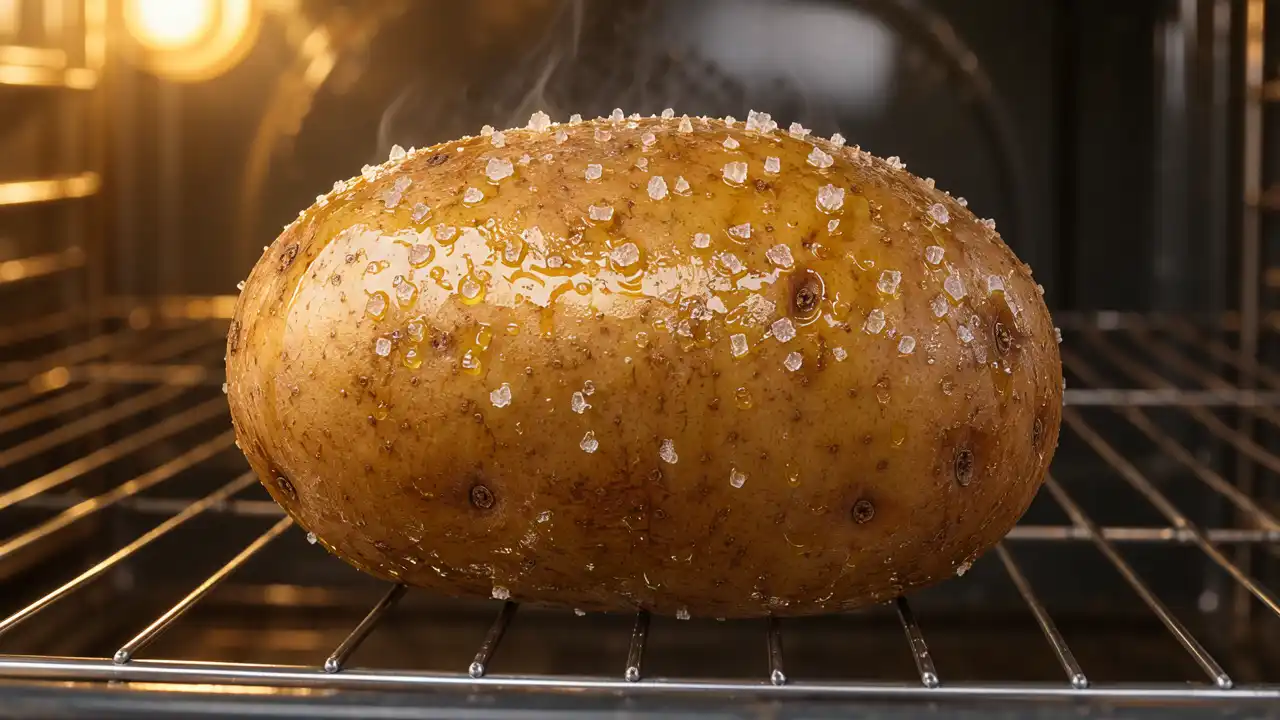
Before the potato hits the rack, a few quick actions set up the crisp skin and the clean bloom:
- Scrub the potato under running water and pat it thoroughly dry with a paper towel. A dry surface lets the oil bond to the skin instead of sliding off.
- Pierce the skin four or five times with a fork. This lets steam escape during baking and keeps the potato from splitting at a random, ugly angle. (America's Test Kitchen baked 40 potatoes without pricking and none exploded, but they still recommend it as cheap insurance.)
- Rub the skin with a thin coat of olive oil or a light vegetable-oil spray.
- Sprinkle generously with salt (sea salt or kosher both work).
- Place the potato directly on the oven rack, not on a sheet pan, so hot air circulates all the way around it.
One timing note from America's Test Kitchen: oil the skin near the end of the bake, not at the start. Oil applied too early traps moisture in the skin and keeps it from dehydrating and crisping. A brief final stint in the oil is what gives the skin that brittle, crackling finish.
The bloom: massage, puncture, squeeze
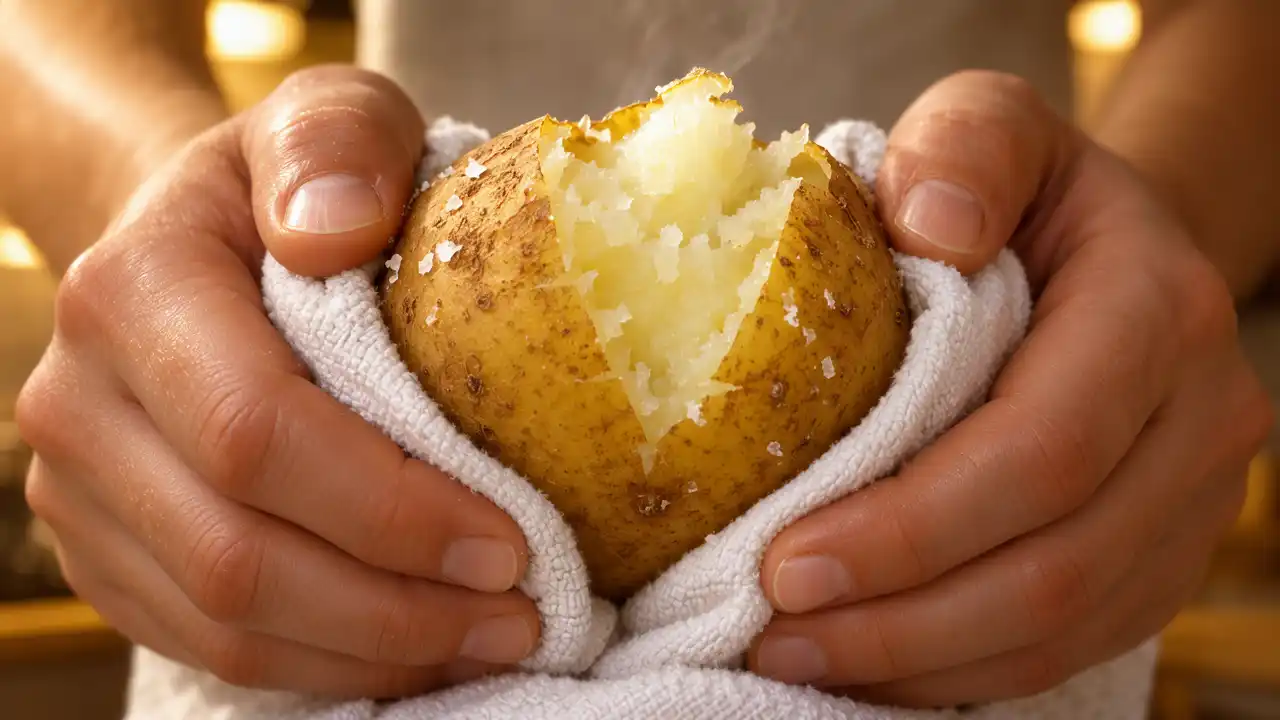
This is the step that turns a good baked potato into a restaurant-style one, and it takes about 60 seconds of hands-on work.
- Let the potato cool for a minute or two after it comes out of the oven. You want it warm enough to be pliable but cool enough to handle with a towel.
- Take a fork and make a series of short, zig-zag punctures across the top of the potato, working from one end to the other. You're creating a grid of weak points in the skin.
- Wrap both hands around the potato (a kitchen towel helps) and gently massage it, working the flesh loose from the inside of the skin without tearing the skin itself.
- Now the fun part. Squeeze upward from the bottom of the potato. The interior, already loosened by the massage, pushes out through the zig-zag seams and the potato "blossoms" open into a wide, fluffy bowl.
The result is a hollowed-out center with a crisp, salted rim. It holds toppings the way a small bowl does, and the contrast between the crackling skin and the soft, starchy interior is what makes a baked potato feel like a dish rather than a side.
Toppings and serving
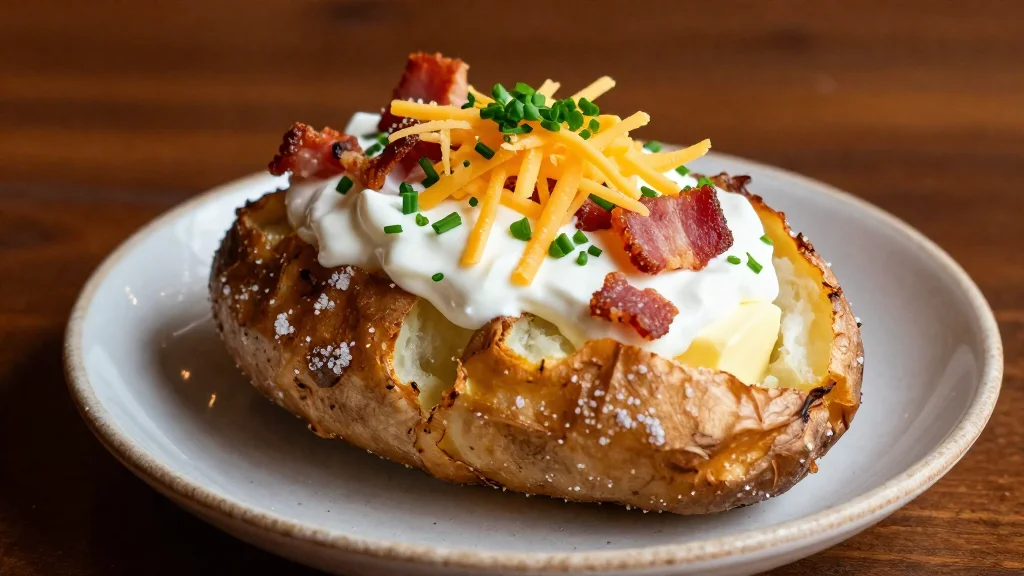
The potato is best served immediately, before the residual steam softens the skin. A pat of butter, a dollop of sour cream, shredded cheddar, fried bacon, chives, or a spoonful of guacamole all work. Homemade Home lists a long menu of options (salsa, black beans, broccoli and cheese, green onions) and notes that the potato is the canvas, not the star. Love and Lemons suggests a simple pairing of butter and cashew sour cream, which keeps the focus on the potato's own flavor.
If the potato has to wait for a potluck, pop it back in the oven for a few minutes before serving, or loosely cover it with foil on a platter rather than sealing it in a container. That keeps the skin from going limp.
Quick reference
| Step | Detail |
|---|---|
| Potato | Russet Burbank, 10–12 oz |
| Oven temp | 450 °F |
| Bake time | 45–60 min, or until 205 °F at center |
| Prep | Scrub, dry, pierce, oil, salt |
| Bloom | Zig-zag fork punctures, massage, squeeze from bottom |
| Serve | Immediately, with butter, sour cream, cheese, or bacon |
A baked potato doesn't need a recipe card. It needs a russet, a hot oven, a pinch of salt, and the willingness to give it a good squeeze at the end. That last part is the whole trick.